A client calls before your morning standup. Someone has posted a video of their CEO announcing a fake earnings disaster, and employees are already forwarding it internally as if it were real. Legal wants takedowns, PR wants answers, and the board wants to know why the security team didn’t see it coming.
That situation used to sound edge-case. It doesn’t anymore.
As an MSP or MSSP, you’re now expected to cover synthetic-media risk the same way you cover phishing, credential exposure, and brand impersonation. The challenge is that most deepfake detection tools weren’t built with channel delivery in mind. They may have strong demos, but weak APIs, no white-label path, unclear usage pricing, and awkward integration into the tools you already run.
The market is also still young. Dedicated commercial providers only began appearing in 2017, and the UK government’s market mapping found the provider field had expanded by nearly 380% since then, with 59 third-party providers identified worldwide and 7 based in the UK, which shows how fast this category has spread internationally (UK government deepfake detection market mapping).
This guide focuses on what matters in managed services. API access, resale fit, alert quality, evidence handling, and whether a tool can sit inside an existing security stack without creating a second job for your analysts. If you also package offensive validation into your client offering, this pairs well with white-label automated pentesting solutions.
1. InsecureWeb
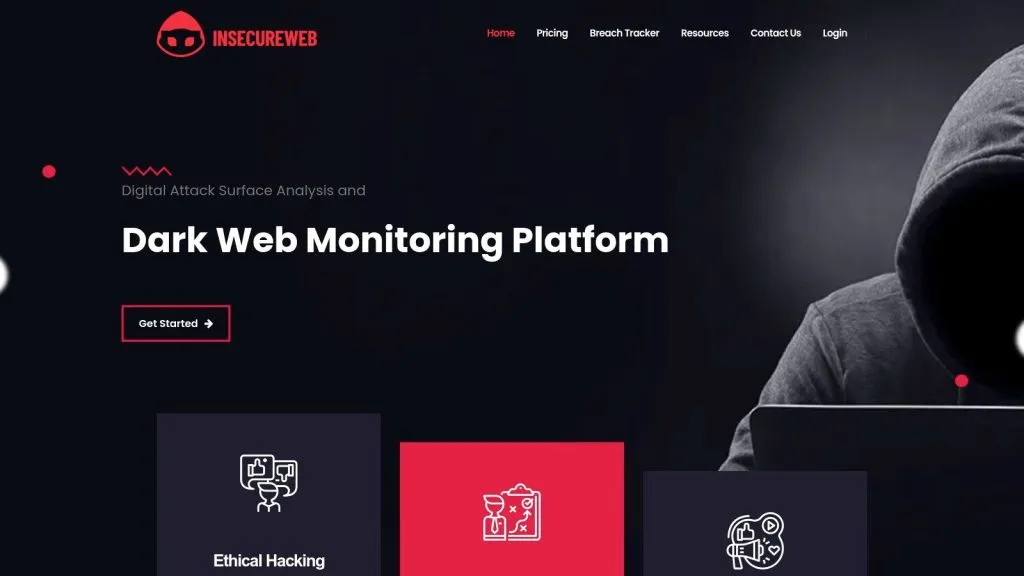
A client calls after staff receive a convincing video from someone posing as the CEO. By the time the security team asks whether the clip is fake, the scope of the problem is already wider. Spoofed domains are live, credentials may be circulating, and fake social profiles are pushing the same narrative. That is the context where InsecureWeb makes sense for an MSP.
Instead of treating deepfake detection as a standalone media-forensics tool, InsecureWeb places it inside broader external threat monitoring. For managed service providers, that is often the better fit. The service problem is rarely limited to one suspicious file. It usually includes impersonation, reputation abuse, fake accounts, exposed credentials, and internet-facing weaknesses that give the campaign more reach.
The platform combines deepfake and reputation monitoring with dark web monitoring, fake site and fake account detection, vulnerability scanning, and AI-guided penetration testing. That gives MSPs a clearer path to packaging a client service around risk reduction, response, and reporting, rather than selling a narrow detection widget.
Why it fits managed services
InsecureWeb is built in a way that maps well to channel delivery. API access and white-labeling matter here because most MSPs do not want another standalone console that clients have to learn. They want findings to flow into PSA tickets, SIEM workflows, case management, or a branded client portal.
The commercial model also lines up with how many providers package services. There is a free tier for evaluation, pay-as-you-go for lighter usage, and an MSP plan starting at $290 per month for up to 150 domains, IPs, or phone assets, with live monitoring, unmasked data, and white-label support. That is easier to price into recurring offerings than a vendor that only sells through custom enterprise contracts after a long sales cycle.
I would still model asset growth before rollout. Per-asset pricing is workable when asset inventories are clean. It gets harder when a client has years of unmanaged domains, legacy phone numbers, abandoned IP space, and duplicate records sitting in scope.
Where it works best
InsecureWeb fits best when the MSP already delivers brand protection, exposure monitoring, or attack surface management. It is useful for clients that want one provider watching the open web, dark web, and social channels, without forcing the service team to glue together several specialist products and normalize the output themselves.
A few points stand out in practice:
- Broader incident context: Deepfake monitoring sits next to fake sites, fake accounts, exposed credentials, and reputation threats, which helps analysts assess whether a suspicious clip is part of a larger campaign.
- Channel-ready delivery: API access and white-label support make it easier to embed findings into an existing managed security offering.
- Useful adjacent controls: Vulnerability scanning and AI-guided penetration testing can help validate where an impersonation or fraud operation may find an opening.
- Flexible service packaging: MSPs can test it on a smaller client set, then fold it into a recurring monitoring bundle if the workflow proves out.
The strongest use case is correlation. If an analyst needs to answer both “is this content suspicious?” and “what else is happening around this impersonation attempt?”, a platform with wider external visibility will usually be more useful than a point detector.
There are trade-offs. The free tier is narrow, so meaningful evaluation may require a paid test. It is also not a replacement for manual red-team work when a client wants custom adversary simulation or deep validation. For regulated buyers, confirm evidence requirements and certifications during procurement instead of assuming the platform will clear that review.
MSPs building an external threat monitoring service should also consider how synthetic media fits into the rest of the client’s exposure profile. Pairing media monitoring with dark web monitoring for exposed credentials and impersonation activity gives analysts a more useful operational picture than reviewing suspicious media in isolation.
2. Reality Defender

Reality Defender is one of the cleaner enterprise options if you need multimodal coverage without building everything yourself. It supports image, audio, video, and text analysis, and it’s built around API and SDK delivery rather than around a one-off analyst console.
That matters for MSSPs serving contact centers, KYC flows, and executive-protection use cases. You can pilot it quickly, then decide whether it belongs in a client-facing managed service or as a behind-the-scenes control in your own detection pipeline.
Best use case
Reality Defender makes the most sense when the problem is live or near-live decisioning. Think suspicious video meetings, contact center fraud, identity workflows, and brand abuse monitoring where teams need a verdict quickly enough to shape response.
Its appeal is less about flashy marketing and more about packaging. The free developer tier lowers the barrier to testing, and the vendor has the sort of trust and enterprise collateral that tends to help when security, procurement, and compliance all want different answers.
A practical pairing is combining media verification with external exposure monitoring. If a client is worried about impersonation campaigns, synthetic media rarely appears in isolation. It often sits next to credential theft, spoofed domains, or account takeover signals, which is why dark web monitoring benefits for MSP investigations often belong in the same conversation.
Don’t buy a multimodal detector unless you know where each output lands. SOC queue, fraud team, PR escalation, or legal review.
The trade-off is transparency. Public-facing technical performance detail is limited, and some of the more advanced workflows will push you into a sales cycle. That’s normal in this segment, but MSPs should test the API, alert quality, and evidence output before promising anything client-facing.
For teams that want a modern, integration-friendly detector with broad modality coverage, Reality Defender is a serious option.
3. Sensity AI
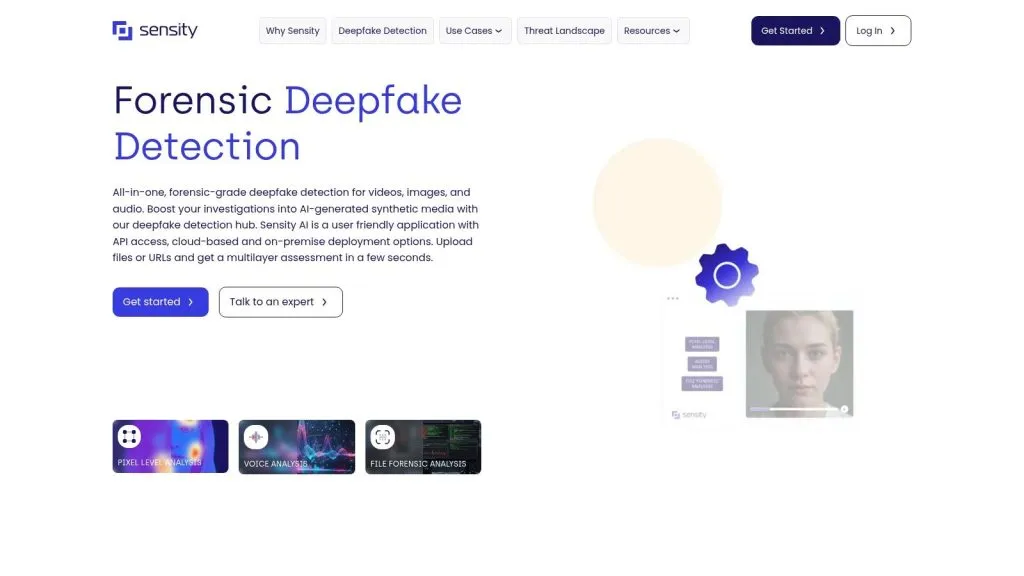
A client sends over a suspicious executive video at 4:40 p.m. Legal wants a defensible answer. The SOC wants a triage signal. The account team wants to know whether this can become a managed service instead of a one-off analyst project. Sensity AI fits that kind of job better than lightweight detectors built around a simple pass or fail result.
The platform is better suited to forensic review than high-volume commodity scanning. It analyzes visual, audio, metadata, and behavioral indicators, and it offers both cloud and on-prem deployment. For MSPs and MSSPs, that matters because deployment flexibility changes who you can serve. Public sector, regulated firms, and clients with evidence-handling requirements often care as much about where analysis runs and how results are documented as they do about raw detection speed.
Where Sensity AI fits operationally
Sensity works best in service lines where the output needs to hold up under scrutiny. That includes executive impersonation cases, manipulated media tied to insider disputes, and investigations that may end up with compliance, HR, legal, or external counsel. In those environments, a clean report, analyst-readable findings, and a usable chain of review are more valuable than a fast score with little context.
For MSPs, the main evaluation question is packaging. Can the API feed existing case management and SIEM workflows. Can the evidence output support a white-labeled incident response or advisory offering. Can pricing be mapped to a per-asset model that still leaves room for margin. Those are the questions to answer before putting it into a client-facing catalog.
A practical advantage is deployment choice. On-prem can remove friction for restricted environments, while API, SDK, and web app options give teams several ways to build intake and analyst workflows.
A few points stand out:
- Better fit for evidence-heavy work: Useful when clients need findings that investigators, compliance teams, or counsel can review.
- Multiple delivery options: API and SDK access support integration into existing security stacks instead of forcing analysts into a standalone portal.
- Stronger MSP service potential: The reporting layer is easier to package into retainer-based investigations or premium verification services than a bare detection feed.
The trade-off is commercial, not technical. Pricing is not posted publicly, so margin modeling takes real vendor conversations. That slows down service design for MSPs that prefer transparent, usage-based buying. I would also test turnaround time, false-positive handling, and report quality with your own sample set before promising anything under an SLA.
Sensity also pairs well with broader impersonation monitoring. Synthetic media incidents often show up alongside exposed credentials, spoofed domains, or executive targeting, which is why early signs that a client needs dark web monitoring often belong in the same assessment.
If your practice supports investigations, regulated accounts, or clients that need evidence packaged for review, Sensity AI deserves a serious evaluation.
4. Hive (Hive AI)

Hive is less of a pure-play deepfake vendor and more of a broader AI content-understanding platform with deepfake and AI-generated media detection built in. That’s a strength if your managed service already touches moderation, trust and safety, brand monitoring, or large-volume media triage.
For MSPs, the appeal is practical. The API is mature, the pricing model is visible, and there’s an enterprise interface for teams that don’t want every workflow to start with a developer.
Where Hive makes sense
Hive works best when clients need bulk classification of images and video, especially inside moderation or brand-safety pipelines. If your use case is “scan a lot of content fast and route the risky items,” Hive is easier to operationalize than many specialist forensic products.
The broader market direction also supports this kind of deployment. In 2024, the Video & Image Deepfake Detection segment held more than 66.7% of the global market, cloud-based delivery accounted for over 61.8%, and media and entertainment held 49.2% of market share, which reflects how heavily buyers are prioritizing visual verification, scalable API delivery, and content moderation workflows (deepfake detection market segmentation at Market.us).
A few operational notes:
- Good for bulk media: Strong fit for ingestion pipelines and moderation queues.
- Useful pricing posture: Public usage-based pricing helps MSP margin planning.
- Accessible to non-developers: The enterprise UI can reduce internal support overhead.
If a client’s brand is already being abused in public channels, this often sits alongside broader reputation and exposure work. That’s why signs you need dark web monitoring often appear around the same time as synthetic-media concerns.
The weakness is modality coverage. Hive is strongest on image and video workflows. If voice fraud is a major threat for your clients, you’ll probably need to pair it with a more audio-focused tool.
For media-heavy client environments, Hive is one of the more practical deepfake detection tools to deploy at scale.
5. Truepic

Truepic takes a different route. It focuses on trusted capture and provenance, not just post hoc detection. That’s a meaningful distinction for MSPs supporting insurance, inspections, claims, field operations, or compliance-heavy document and photo workflows.
If your service line depends on proving an image was captured legitimately, provenance can be more valuable than scoring after the fact. In those cases, prevention beats forensic debate.
What it changes operationally
Truepic Lens gives organizations a way to establish trust at the point of capture through a C2PA-aligned workflow. That reduces how often your team has to answer the impossible question after the damage is done: “Can you prove this image is fake?”
This is a different buying motion than a pure detector. You’re not just purchasing analysis. You’re changing the client workflow to create trusted evidence from the start. For some verticals, that’s exactly right. For others, especially public social-media monitoring, it won’t cover enough ground by itself.
Provenance is strongest when you control the workflow. It’s much weaker when you’re reacting to hostile content already in the wild.
The strengths are clear:
- Capture-time trust: Useful for claims, inspections, compliance, and evidentiary workflows.
- Standards alignment: C2PA involvement helps with authenticity discussions.
- Good complement: Works well alongside post-hoc detection and risk scoring.
The trade-off is equally clear. If your MSP needs a standalone deepfake scoring engine for random media found online, Truepic isn’t the cleanest fit. It’s more valuable in designed workflows than in open-ended internet hunting.
For controlled media-capture environments, Truepic is one of the strongest options on this list.
6. Pindrop Pulse

Pindrop Pulse is built for a problem a lot of security buyers now care about more than static media forensics. Live deception. If your clients are dealing with call-center fraud, executive video calls, or high-risk conferencing, Pindrop is aimed right at that operational reality.
That heritage matters. A vendor with roots in call-center fraud usually understands latency, false alarms, and real-time decision pressure better than a tool designed mainly for offline media review.
Where it earns its place
Pindrop is a good fit for organizations that need live meeting and voice protection inside Zoom, Teams, or Webex environments, or for clients where audio impersonation is the higher-probability threat. Financial services, healthcare, BPOs, and executive-facing organizations tend to land here quickly.
It’s also worth keeping your expectations grounded. One of the hardest truths in this category is that deepfake detection tools often perform much better in controlled tests than they do in production. Reported demo or study results can be high, but one analysis noted that real-world performance can drop to roughly 50% to 65%, with state-of-the-art systems showing a 45% to 50% decline against deepfakes circulating online (analysis of why real-world deepfake detection performance drops).
That’s why Pindrop’s use case matters more than generic claims. In live voice and meeting contexts, you don’t need mythology about perfect detection. You need something that can add signal fast enough to influence an operational decision.
A few cautions:
- Narrower scope: It’s not your all-purpose image and video archive triage tool.
- Sales-led model: Expect enterprise engagement, not self-serve deployment.
- Workflow dependency: It’s strongest when tied to a fraud or trust process that already exists.
If voice and live meetings are the client’s main risk, Pindrop Pulse is one of the most relevant specialist tools available.
7. Resemble Detect
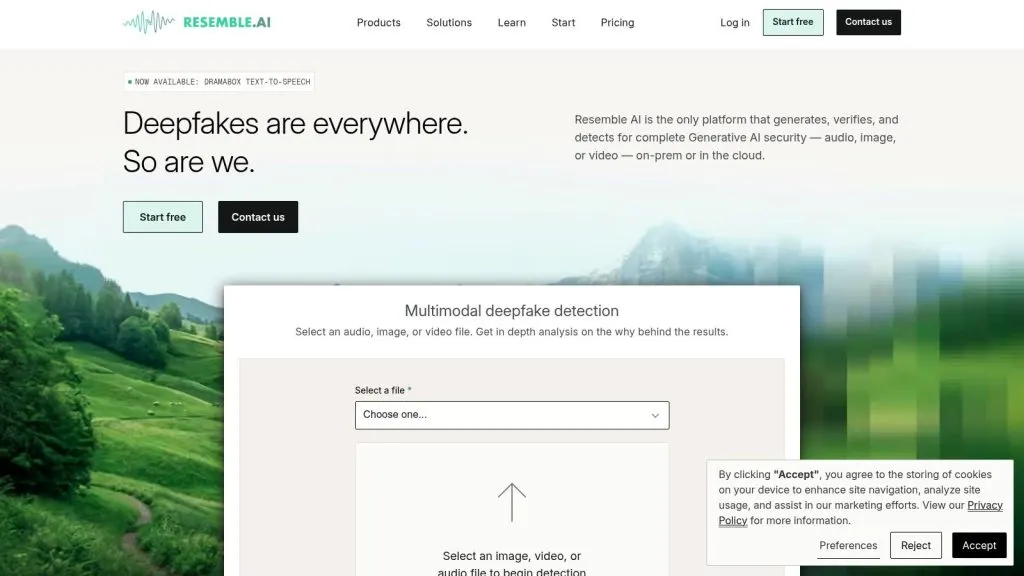
Resemble Detect is attractive for one simple reason. It’s easier to budget than a lot of this market. For MSPs trying to package deepfake detection into a service catalog, transparent usage pricing matters more than glossy brand positioning.
It also covers more than audio. The platform supports audio, image, and video detection, with a meetings-focused angle and a browser extension that can help non-technical teams do lightweight checks without waiting on engineering.
Why MSPs may like it
The combination of API access, published pricing, and several adoption paths gives Resemble an edge for service providers running mixed client environments. You can use it in a backend workflow, hand a lighter tool to a comms or legal team, or apply it to live meeting scenarios depending on the engagement.
That flexibility helps because many clients don’t have one deepfake problem. They have three. A PR team wants suspicious clip triage, a finance leader wants meeting protection, and security wants signals that can be logged and correlated.
Its strengths are straightforward:
- Pricing visibility: Easier to estimate service cost before procurement.
- Multiple entry points: API, extension, and meetings product cover different buyer maturity levels.
- Strong relevance for audio: Useful if voice cloning is showing up in your threat models.
The caution is usage discipline. Per-second billing can become painful if your team starts throwing long recordings at it without a clear triage rule. Long-form media needs governance, not just tooling.
For MSPs that want flexible deployment and less pricing ambiguity, Resemble Detect is worth serious consideration.
8. TrueMedia.org
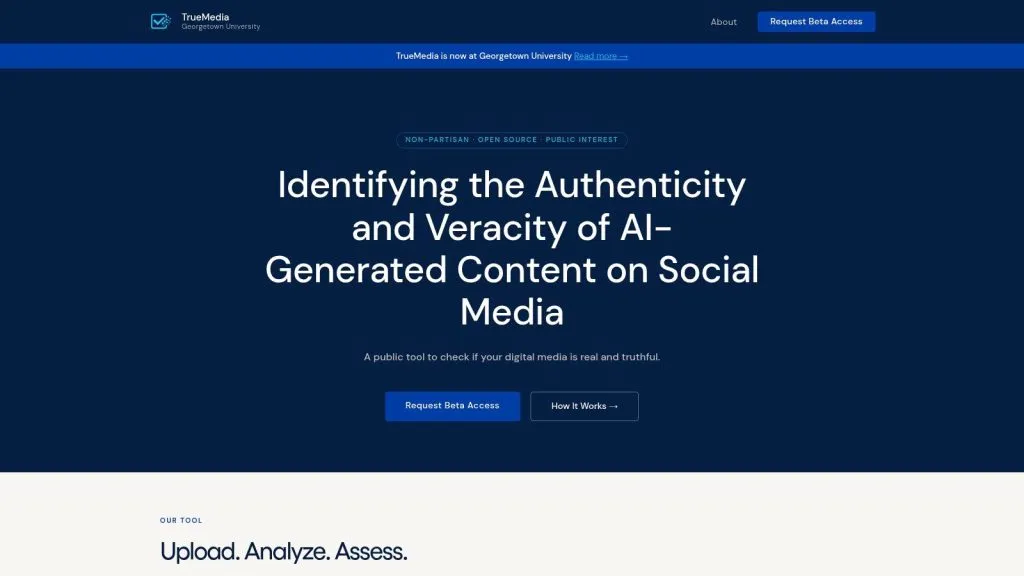
TrueMedia.org isn’t an enterprise MSSP platform, and that’s exactly why it can still be useful. It aggregates multiple detectors into one report and presents the result in a way non-technical stakeholders can understand.
For MSPs, that makes it less of a production control and more of a fast triage or communications support asset. When PR, legal, or executive teams need an immediate sanity check on suspicious media, low-friction tools have a place.
Where it helps
TrueMedia.org is useful when your audience isn’t the SOC. It’s a good fit for comms teams, public-interest monitoring, journalists, researchers, and organizations that need fast contextual review before escalating to a more formal investigation.
That matters because many synthetic-media incidents start outside security. A communications lead sees a clip. A legal team gets a complaint. A board member forwards a suspicious video. If your only answer is “open a ticket and wait,” the client experience suffers.
A lightweight triage tool can reduce panic, even when it isn’t your final evidentiary system.
The limitations are equally clear:
- Not built for enterprise plumbing: Limited commercial SLAs and integration depth.
- Not ideal for evidence-heavy cases: Better for triage than for formal adjudication.
- Public-interest orientation: Great for accessibility, less ideal for strict operational control.
I wouldn’t build a managed service around it. I would keep it in the playbook for rapid first-pass review and stakeholder communication. In that role, TrueMedia.org is very useful.
9. Google SynthID Detector
Google SynthID Detector is narrow, but narrow can be powerful when teams understand what signal they’re getting. It detects SynthID watermarks embedded in Google-generated content, which means it can provide a high-confidence indicator when that watermark is present.
That’s not the same thing as broad deepfake detection. It won’t tell you whether any arbitrary piece of media from the internet is fake. It tells you whether specific Google watermarking is there.
Best way to use it
Use SynthID Detector as a layered signal, not as a universal verdict engine. It’s helpful for verifying content that may have originated inside Google’s ecosystem or partner surfaces where SynthID is relevant.
This is one of those tools that becomes more valuable when your analysts are disciplined. If the watermark is present, that’s useful. If it isn’t, that doesn’t prove authenticity. It only means this specific provenance signal wasn’t found.
The strongest use cases are straightforward:
- Fast provenance check: Useful when checking content tied to Google generation pathways.
- Low-friction adjunct: Good companion to broader detection and authenticity workflows.
- Clear signal definition: Easier to explain internally than a vague composite score.
The main weakness is obvious. Coverage is limited to content carrying the relevant watermark. That means attackers using other generation methods won’t be caught by this control.
For teams that understand provenance layers and want a precise supplemental signal, Google SynthID Detector is worth having in the toolkit.
10. Veriff (Biometric Liveness & Deepfake Detection)
A client fails a selfie check on Monday, passes on the second try, and opens an account with stolen identity data by Tuesday. That is the operational problem Veriff is built to address.
For MSPs and MSSPs, Veriff makes sense in client environments where deepfake risk shows up inside identity verification flows, not in open-web monitoring or brand protection. Its value is tied to onboarding, account recovery, age checks, and other moments where a spoofed face, injected video, or synthetic identity can slip past weak controls. If you support fintech, marketplaces, gaming, crypto, hiring platforms, or regulated services, that distinction matters.
Veriff’s strength is passive liveness and deepfake-aware analysis inside a broader identity workflow. That usually means lower user friction than challenge-based checks, which can improve completion rates while still giving fraud teams usable signals. The trade-off is scope. This is not the tool I would put in front of an analyst who needs to examine random videos from social platforms or triage misinformation incidents across the public internet.
From an MSP packaging standpoint, the buying questions are practical. Can it plug into the client’s onboarding stack through API or SDK? Can your team support deployment without rebuilding the customer journey? Can pricing map cleanly to verification volume so margins stay predictable? Those factors matter more here than broad media-forensics features because Veriff is usually purchased as part of a revenue path or fraud-reduction control, not as a standalone SOC console.
A few things stand out:
- Best fit for ID-centric fraud controls: Useful for selfie, document, and account-access workflows where presentation attacks create direct financial risk.
- Good service fit for regulated clients: Stronger option for MSPs supporting KYC, KYB, AML-adjacent, and age-restricted environments.
- API-first adoption path: Easier to slot into existing identity stacks than tools designed mainly for analyst-led media review.
- Limited MSSP use outside identity workflows: Less useful if your managed service focuses on threat intel, trust and safety moderation, or public-content investigations.
The main operational downside is also clear. Veriff is specialized. If your managed offering needs one detection layer for voice, image, video, and text across multiple client use cases, you will probably pair this with broader detection tooling instead of using it as the only control.
If the client problem is onboarding fraud, account takeover recovery, or synthetic identity abuse inside a verification journey, Veriff is a strong fit. If the requirement is wide-spectrum deepfake triage across the web, choose a different category of tool.
Top 10 Deepfake Detection Tools Comparison
| Product | Core features | Detection scope & quality (★) | Value & pricing (💰) | Target audience (👥) | Unique selling points (✨/🏆) |
|---|---|---|---|---|---|
| InsecureWeb 🏆 | Dark‑web monitoring, fake‑site/account detection, vuln scans, AI‑guided pentests, deepfake & reputation monitoring, API & white‑label | ★★★★★ real‑time; 18B+ breach corpus | 💰 Free tier; PAYG ~$0.40/asset; MSP plan from $290/mo (150 assets) | 👥 MSPs, hosting providers, security firms, mid‑market IT | ✨Partner‑first white‑label + free API; integrated offensive+defensive stack; Breach Tracker 🏆 |
| Reality Defender | Multimodal deepfake (image/audio/video/text), API/SDK, real‑time workflows | ★★★★ frequent model updates; real‑time signals | 💰 Free dev tier (50 scans/mo); enterprise pricing | 👥 Enterprises, MSP pilots, contact centers, KYC | ✨Turnkey workflows for contact centers & KYC; enterprise posture |
| Sensity AI | Forensic multilayer analysis (pixel/voice/metadata), on‑prem/cloud, court‑ready reports | ★★★★★ forensic, explainable confidence scores | 💰 Sales‑led pricing | 👥 Investigations, public sector, legal teams | ✨Court‑admissible reports; on‑prem for chain‑of‑custody |
| Hive (Hive AI) | Single endpoint for AI‑generated media, API/SDKs, enterprise UI for moderation | ★★★★ mature at scale for image/video | 💰 Usage‑based pricing visible; enterprise options | 👥 Content moderation, brand safety teams, MSPs | ✨Scalable API + non‑dev enterprise UI; public pricing aids forecasting |
| Truepic | Capture‑time provenance SDK (C2PA), verification & risk intelligence | ★★★★ provenance‑focused authenticity checks | 💰 Sales‑led enterprise packaging | 👥 Compliance, insurance, claims verification, enterprises | ✨C2PA‑compliant capture + provenance + verification services |
| Pindrop Pulse | Real‑time voice & meeting protection, liveness, presentation‑attack detection | ★★★★ real‑time voice heritage for contact centers | 💰 Enterprise pricing; sales engagement | 👥 Contact centers, conferencing platforms, security ops | ✨Real‑time voice deepfake detection; warranties/assurances |
| Resemble Detect | Unified audio/image/video detection, API, Chrome extension, meetings product | ★★★★ strong audio & meetings coverage | 💰 Transparent pay‑as‑you‑go (per‑second rates) | 👥 MSPs, developers, meeting platforms | ✨Per‑second pricing + meetings extension; explainability layer |
| TrueMedia.org | Aggregates multiple detectors into one report; explanatory context | ★★★ aggregator for rapid triage; uncertainty notes | 💰 Public/research access; low friction | 👥 Journalists, researchers, PR/comms, civil society | ✨Multi‑detector aggregation + explanatory context for non‑tech users |
| Google SynthID Detector | Detects Google SynthID watermarks (images; expanding to video/audio/text) | ★★★★ very high confidence when watermark present | 💰 Near‑zero friction via Google product integrations | 👥 Platforms using Google tools, provenance checks | ✨High‑confidence watermark signal; useful adjunct to detectors |
| Veriff (Biometric Liveness & Deepfake Detection) | Passive liveness, injected‑media signals, SDKs for IDV/KYC flows | ★★★★ purpose‑built for onboarding; low friction | 💰 Sales‑led enterprise pricing | 👥 Fintechs, marketplaces, IDV/KYC teams | ✨Passive liveness + deepfake signals to reduce onboarding friction |
Stay Ahead of the Synthetics
The biggest mistake MSPs make with deepfake detection tools is expecting one product to solve one category. That’s not how this risk shows up in real client environments. Deepfakes intersect with brand impersonation, account abuse, wire fraud, support desk manipulation, executive protection, and identity verification. Your stack should reflect that reality.
The first decision isn’t “which detector is best?” It’s “which problem are we solving?” If the problem is public brand abuse, you’ll lean toward broad monitoring and media triage. If it’s onboarding fraud, identity and liveness tools make more sense. If it’s live executive calls, meeting and voice protection become the priority. And if your clients need evidentiary support, forensic reporting and provenance matter more than speed.
This category is also maturing unevenly. Some vendors are excellent at API delivery but weak on explainability. Others are strong in forensics but difficult to price into a managed offer. Some are built for enterprise procurement and not for channel resale. For MSPs and MSSPs, those commercial details matter just as much as model quality.
A layered deployment usually works best:
- Use broad external monitoring for fake accounts, fake sites, brand impersonation, and social-media abuse.
- Use specialist media tools for high-risk videos, voice content, and investigation workflows.
- Use identity-focused controls where deepfakes are part of onboarding or account takeover.
- Use provenance and capture controls where you can shape the workflow before media gets disputed.
- Use human verification procedures for high-risk approvals, especially for finance and executive communications.
That last point matters most. No detection layer should be trusted as a standalone control. High lab claims don’t guarantee production reliability, and mature attackers adapt quickly. The practical answer is to combine technical detection with out-of-band verification, escalation playbooks, and analyst review.
If you’re building a service around this, start with one client-ready use case. Executive impersonation monitoring is often the easiest place to begin. It’s visible, urgent, and easy to explain commercially. From there, expand into identity workflows, social-media reputation monitoring, or fraud operations depending on your customer base.
The firms that handle synthetic-media risk well won’t be the ones with the longest vendor list. They’ll be the ones that integrate the right tools into an actual service model. If you want another adjacent area to watch as these workflows evolve, AI facial analysis technology is worth tracking for how organizations assess identity and visual trust signals more broadly.
Start small. Test the API. Push alerts into your own workflow. See what your analysts can use. That’s how you separate a demo from a service.
If you want a practical starting point, InsecureWeb is the easiest platform here to turn into a managed client offering. It gives MSPs and MSSPs deepfake and reputation monitoring alongside dark web monitoring, fake site and fake account detection, vulnerability scanning, and AI-guided penetration testing, with white-labeling and API access included. That combination makes it easier to sell a real external-risk service instead of yet another isolated security tool.